I know improvisation is a big part of your creative process. How do you uncover the initial spark of a song?
Because I write songs, a lot of times, I am dealing with the music, the sound, the instrumentation, and also lyrics – which are a whole other world. It is a combined world, but I think my process starts with improvisation: Sitting and playing on the keyboard and often using my voice as well. I record my voice and keyboard together and come up with ideas that way for 20 or 30 minutes. That is often a starting place. But, before that, or in the middle of that, I will often be working with text as well – a stream-of-consciousness writing, or something that allows words to flow. I try to think about what world I am trying to sit in, or what feeling. Often the world emerges through the process too.
Are you usually recording into a DAW? Are you using a click, or is it freeform?
Usually I am recording into [Apple] Logic, which is the DAW I use. Usually there is no click at first, if I’m just improvising. If I come up with a percussive idea, then that becomes a little bit like a click. There are songs that start that way. "The Laugh Is in the Eyes" ["TLIitE"] is like this. It started with a drum beat and that made it more beat-oriented. It developed out of this one beat I made. A lot of people work that way, obviously. But my music often starts with the keyboard first, in an improvisatory position.
How do the lyrics come? Is it usually before you write the melody, through the melody, or after?
It is all of the above. Sometimes I have documents with notes, with tons of words I’ve come up with. I also write in notebooks – stream-of-consciousness or automatic writing – to help generate ideas. It helps me come up with the world I am trying to get into. This tends to happen before. If I am sitting down to write a record, I might be doing some of that beforehand to try to come up with ideas. But a lot of times, the sound comes first for me. It is a mix. With this record it was different, because I did not originally plan to make it. It was not like I thought, "I am going to make another record." It felt like a part of Something in the Room She Moves [SitRSM]. It just sort of happened. I don’t think I was sitting down with that intention in the same way, although I might have done some writing to cover the lyrics. "TLIitE" was the first track I made, and that was the start of this record. "TLIitE" is from the lyrics for "Spinning," which is on my last record. That gives me a sense that I was trying to channel some of the vibes from the previous record.
That is super cool. I love how this record pulls from little pieces of the previous one. Going back to what you said about sitting down to make a record: What does it mean to you to have the intention of making a record, versus this record, which you didn’t originally intend?
A lot of times, I jump off from something I just did and I want to make something very different. To me, my records are very different from each other, although other people may not hear them as that different. That’s usually where I’m at when I’m going to work on something. I am in a place like that right now, actually, where I’m trying to start writing and I want it to be different. That is usually an exciting place to be in when I make a record. In this case, it was different. It was more like I wanted to stay in the same world. I wanted to be in the world I was in with SitRSM and continue that world. I think there are a couple of reasons. I was in the middle of touring, and I wanted to make a new song that we could play live. That was "TLIitE." I made it with the band. It was the same band that was on the last record, and it felt connected in that way. It felt like it was part of SitRSM in some way. It didn’t feel like I was making a whole new record in a different world. It’s a feeling for me. Because it started emerging that way, and because I started using improvisations I had done while making SitRSM and incorporating those into it, it became a continuation of that record. It emerged that way, whereas usually I have a different impetus.
A lot of artists, when asked how they know a song is finished, say, "When it is released." I am curious about how that works for you. On this record, you have revisited songs and released new versions. Is it a whole new song, or a continuation of the song?
It becomes its own thing. When I was making "Materia 2," I went through the same process. I treated it like its own song, not just as a version of something that already existed. It took a while to get the right vibe. I wanted a certain vibe, and I was trying to capture that. It ended up being the same as with any of my songs, even though it was a song that already existed.
With "TLIitE," you said you did that with the band, but you started with a drum beat you made. Was that a loop from the band, or something you made on a drum machine?
I made it at home on MIDI. It was a basic drum kit on MIDI, and then we had real drums play it. Beth Goodfellow played it. It was just this basic drum beat, but it was distinct because it was in five. It had a lilt to it that was distinct for my music. A lot of music is in five, but my music is not often in five, so it had a very specific character. The chorus is still in five, but it’s also sort of in four. It’s crazy for the rhythm section to play live, because Devra is playing the bass note on the one of each bar in five, but I am playing the synth chords every four beats. Tashi is playing live with me, so he and I are in four-ish, and then the rhythm section is in five. In that section, it all works for some reason. It was challenging to get live, and it is very fun to play live.
One thing I’m curious about is how you go from having these long solo improvisations to a place of collaboration. Are you making a demo that you bring to the band?
I usually make a demo. The band plays over it, improvises over it, and I also make charts. It depends on the song. For Devra especially, who writes her bass lines a lot of the time on my songs, she takes some time with them. For example, on "TLIitE," I made a silly mock-up fretless bass solo in MIDI as a placeholder for myself. I was into it, but Devra is incredible and did her own thing. She writes her own stuff a lot of the time, so she is writing on those songs in that way. I love the bass and there are songs of mine that have defined bass lines. But a lot of times she writes them, so it is a mix. She spent a lot of time with the songs on SitRSM. For example, on "Evening Mood" and "Spinning," she spent time writing those parts. On this new record she did too, though we worked together more quickly. She is a big part of it. There is also a lot of stuff that Chris Speed does on sax and clarinet. I give him a lot of space. I think of that as him writing melodies. There is a lot of collaboration in that. But I do have charts and demos that I make, and I am generally pretty controlling about it.
How much room are you leaving in the demos?
The demos are often quite similar in form to the final songs. That is how I convey things. I like to have a lot of different ways of conveying things. I have the demo, and usually I have a chart. It is not always necessary, but usually the chart will sometimes have melodies and parts written out. Sometimes there are fully notated parts. I do not think the songs on this current record have much of that. This one is more charts, if I’m remembering correctly.
When you bring people in, are you sending them the sessions, demos, and charts, and then you all come together in a proper studio? What does that collaboration process look like?
We did come together in a studio for parts of this record. "TLIitE," "My Lost One," "Materia 2," and "Fantasy" were all worked on in the studio. "Materia 2" and "Fantasy" were fussed with a little, so there is also a lot of my solo work there. But we were in the studio, in a similar way to how we were with the last record.
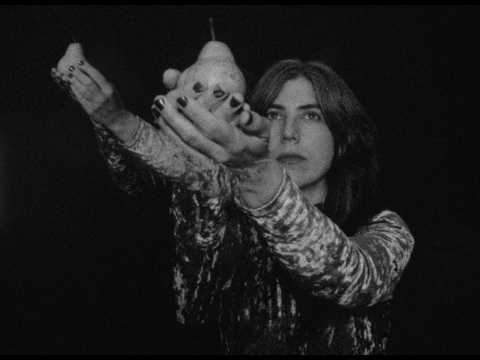
How does the studio environment help you?
I love being in the studio with a band. It’s my favorite place to be in the world. It is the best. It’s a real privilege; it’s super indulgent and fun. There is nothing like it. I don’t really have a proper studio at home. I have a room with a computer, speakers, headphones, and a little bit of gear, but not a lot. I just got my first synth recently: the [Black Corporation] Deckard's Dream, which is modeled after the Yamaha CS-80. I have wanted one forever. The CS-80 is impossible to have, and even CS-60s are impossible to find, at this point. I am obsessed with them, and they are on most of my records. There is a CS-60 on this record because it is in the studio. I don’t have a lot of gear at home, compared to some musicians. Tashi [Wada], my partner, has some nice synths, but I personally don’t have much. Going into the studio is great because I like to use the keyboards there, like a Rhodes or a Wurlitzer. I recorded SitRSM at 64 Sound in Highland Park, L.A., and this record too. We also did some at the Stones Throw recording spot, also in Highland Park, for overdubs.


Photos from recording sessions for Materia
When you bring in a demo to the studio, are you playing along with the band, or are they overdubbing on top of the demo?
I am recording with the band for some of the songs. With Beth and Devra as the rhythm section, we had some great sessions recording SitRSM. They were so fun. I was playing organ, and they were playing drums and bass. We did that this time with "TLIitE," I believe. I was playing with them all at the same time. We also did "My Lost One" together at the same time, and that was fun because there is a whole speed-up thing at the end. We did "Fantasy" together too, and "Materia 2."
Going back to your process of moving from improvisation to structure: Once you have these improvisations, do you do a separate session for editing and arranging? Or does it happen all at once?
It is different with every song. Some songs are very different from each other. "My Twin" and "Clepsydra" on this record are basically the original improvisations. With "My Twin," I fussed with it a little. There is a section where a drum machine comes in, and I changed that whole section. But otherwise, the rest of it is from one of those moments where I am improvising to make a song. On a more convoluted level, the song "Fantasy" came out of one of the moments from "My Twin." "My Twin" was meant to be me writing. It ended up being a song in itself, within that take. I liked the performance and kept it. It was not intended to be a song, but I was able to keep the final performance there.

The part you pulled for "Fantasy" was originally inside "My Twin"? You pulled a melody?
I took this keyboard riff that was originally in the improvisation that became "My Twin."
Did you take the MIDI and start a new project file?
Yes, I took the MIDI and started a new project file. I edited it a little. I replayed it in this music box sound that I love. I tried to record it on Rhodes and make it not be MIDI, but it did not sound right. So, in the final version, it is just MIDI, but I processed it a lot in "Fantasy." I do not think that riff is in "My Twin" anymore. It was in the section that gets a drum machine, and I rewrote that section. That is an example of how that can happen. "My Twin" is more like a long improvisation, and it has a lot of twists and turns. "Fantasy" is another type of song of mine, where there is a verse and chorus. The processes for those two songs were quite different, depending on the instrumentation. "My Twin" was all me, so I was not dealing with anyone else playing on it. If I ever play "My Twin" live, I will have to transcribe it for myself. With other songs, I have to transcribe it in order to communicate them to people. That means making charts or, in some cases, notated parts. On my last record, SitRSM, there were some notated parts I gave people. On this record especially, it is very chart-based. There are not a lot of notated arrangements. On Aviary, my record from 2018, there is a lot more of that.
When you are working on a record, are you trying to have a balance of songs that are more structured, like “Fantasy,” and more improvisational, like “My Twin”?
I don’t think so. I work with each song, and I often let the parts determine the whole. I am probably still strategizing a little without being overly conscious of it; what is needed, or what feels needed. I didn’t even realize I was making a record. I thought I had made this one song.
Do you make a record because you want to capture the songs you make over a certain period of time, or is it more that if it fits the vibe, it goes on the record?
Things just felt right. It was about what was needed. I had these band member songs, but I was really tackling them intensely. "Fantasy" was an extremely overworked song. I cannot believe it is the single we presented with, because I kept throwing it out. I was surprised when my label said, "Let's have this be the single." I love it now, but it was in a terrible state a year ago. In my head, it felt mediocre or not interesting enough. The band originally played on the whole thing. I don’t remember exactly what it sounded like, but something was off. I ended up having the verses be more low-key and basically all me. There is also Chris on sax, but it is more atmospheric, and then the band comes into the chorus. I really messed with that song. There were tracks like "My Lost One" that I barely had to mess with. It was such an easy one, and it just happened. Most of my songs are not like that. "TLIitE" was also kind of easy to put together for some reason, although it is hard to play. "Materia 2" I messed with a lot as well. I did a separate arrangement for my friend, Jessika Kenney, to sing with me. I took the melody of the song and split it into two parts so we could sing it. First, I recorded it in the studio with Beth on drums, Devra on bass, and me on keys. It sounded really cool. It had this Miles Davis feeling; it was exciting to hear the song that way. Then when I added vocals, it became confusing with the drums. Even though I loved what Beth did, I ended up having it be a drum machine, because that gave it the atmospheric quality it needed. It was a timbral thing more than a playing thing. That drum machine was an Ace Tone drum machine that my friend, Ramona [Gonzalez], also known as Nite Jewel, has lent me for ten years or more. It is a classic little old drum machine. That drum machine felt like a big part of the record. Zooming out, each song had its needs. I wanted to include all the songs, so I figured out ways to make them work together. It made sense for "Materia 2" to be more atmospheric and to give it that space. "Clepsydra" and "My Twin" are both more straight improvisation; exactly what happened in the moment through voice and keyboard. They feel freer, and that felt like a nice complement to the other songs. Then, toward the end, I realized I wanted to slow down "Materia" from the previous record, and that became "Materia 3."
I love that. You mentioned Jessika Kenney coming in to sing. Were you doing harmonies? What made you think, "I need another vocalist here"?
I do not know exactly why. I liked the idea of the song "Materia." The original intent behind it was to switch up how I make melodies. Hildegard von Bingen was the inspiration: Her melodies are very leapy compared to other medieval chants from her time period, which is more stepwise and chant-like. I thought it would be cool to have those melodies with jazzy chords underneath. That was “Materia” originally. There are a lot of reasons for that title too. I did a very simple version of it on SitRSM, and I always wanted to do more with it. I thought it would be cool to not have it so focused on one vocal line, and instead have it arranged as two voices with equal parts, a kind of polyphonic texture. So, I asked Jessika to sing with me. We had been working on other things together unrelated to this, so I asked if we could also do this for a second. I notated a part for us to sing. We recorded that, although I ended up subtracting a lot to keep the track atmospheric. There were so many elements in "Materia" that the challenge was getting them all to work together and not feel like too much was happening at once. I ended up subtracting a lot from the vocal parts, just as I took out a lot of the acoustic drums. It helped a lot. Jessika is an incredible vocalist and composer. Usually when we work together, we’re writing together. Or I’m singing her music, or she is singing mine. She has such an incredible tone to her voice, so it was a little funny to make both of our voices further back in the mix. It was not my original intention, but that particular song needed the voices to be further back. In the future, we will sing together in a more forward way.
Speaking of affecting your voice, are there specific techniques or effects you lean on more than others for vocals on this record?
In terms of gear and plug-ins, one thing that unites this record and SitRSM is that I use a lot of similar sounds. A big one for me, which I have been using since around 2013 on my first studio record, is the Lexicon Prime Time delay. I love it almost as a compositional tool. Now I use it as a plug-in, and the Soundtoys version of it is pretty good. It is such a joy to play with. It does all this fun stuff. I often put it on solos people do, and I use it on my voice a lot on this record. It is beautiful. It has this natural low-pass effect, and it filters things in a nice way. It also creates a mood. My records have that sound all over them, so if someone knows the sound of the Prime Time, they will probably hear it. It was helpful for capturing the vibe and connection on this record. I use it on keyboards, vocals, and winds.
What about outside of the vocals?
I am also always into the CS-60, which was at 64 Sound. MIDI CS-80 sounds are a big part of it too. Before I had the Deckard's Dream at home, I used MIDI versions. That is a big part of the sound. There is a video on the internet of someone using a CS-80 with a Prime Time, which is funny because that is basically my fantasy. If I could have a CS-80 and a Prime Time, that would be amazing. At home, I use other versions of those things. The Ace Tone drum machine was also a big part of the sound. Sometimes I mess with it more. In the past, on Aviary, I used it in more complex drum programming. On this record, with songs like "Materia," "Fantasy," and "My Twin," it is often just the straight drum machine playing. "TLIitE" has more complex drums going on, so that is different. Devra's fretless bass is also a huge part of the sound. Another thing I was into are the GRM plug-ins. They have the Classic GRM set, and I am obsessed with the resonant one. I use it on percussion a lot, often all over the percussion, especially on SitRSM, and also on this record. It can make the drums sound bell-like. A lot of my last record has that in a big way, and I incorporated it on this record too.
Are you tuning the resonance to the key of the song?
I do it by ear, based on what sounds good. So yes, in a sense. But there is nothing mathematical about it. It’s more about what sounds right with the harmony of what is happening.
How did you think about the production for this album?
The production is a continuation of the production of SitRSM. The word "materia" has interesting etymological associations with the word "matter" and with earthly things. I wanted a visceral kind of sound where things sound very close, specific, and tangible. The bell sound I was talking about is part of that. Also, the word "mother" and "mater" being related was part of it. The transformation ideas from my last record still reside in this record. To me, that connects the poetic with the technical.


