How does one of your songs come to be finished? Where does the writing start and where does the recording begin?
Amelia Meath: It is all at once. I write lyrics and melody at the same time. Sometimes that's over something that Nick is making, in the moment, and sometimes it's not. Then we'll build an arrangement together.
Nick Sanborn: There isn't really a formula. It used to be either I made a beat and she wrote to it or she wrote a melody and I wrote to that. Now, it's this hodgepodge in the middle. Sometimes it's one of those things, but usually it's something in the middle. On this record we did two days of improvising with Daniel Aged, who's a great bass and keyboard player, and our friend TJ [Maiani] was the drummer. We did two straight days where we would improvise all day. That sat around for eight or nine months, and then we'd take little pieces of those pieces and make new songs from them. It is like sampling ourselves. It's this unfolding thing.
AM: Particularly for Ow ∞, that just happened over and over again.
On the earlier records, a lot of the percussion is obviously electronically generated, but on the new record it sounds more live. Is that live or are those samples?
AM: There are six drummers on this record, and a lot of that was improvisational. Sometimes we were asking our friends to come in and make samples. They would help us make sample packs that we could then break apart and reuse.
NS: It was a really fun time of bringing in people exclusively with the intention where we don't totally know what this is going to be on yet or anything, but I know a type of thing that we're looking for on a number of different tracks. So, we were going to get iterations of this and treat that as a thing that will mix into that sample.
When you had the drummers in, was that with other musicians? Or was it just the drummer playing, creating samples and grooves, or whatever?
NS: Glenn Kotche [Wilco] came, just him, and we had a full day of drums with him. For some stuff we would play him music, and he would create to it. Other stuff we would say, "What about something like this, or in this tempo?" Or, "What would you do in a lyrical sense in this way?" Then we'd take little pieces of that and layer them.
Are you having people play to a click if you don't have music for them?
NS: Usually instead of a click I'd make a rhythm or something.
AM: Or we'd have them play to the parts of the track that we have so far. Usually, it's a loop that we'd built.
NS: Totally.
What DAW are you working in?
NS: We hit all of the big three on this one.
AM: It was a fucking nightmare. [laughter]
NS: I usually jam in Ableton [Live], because it's easiest for that type of thing. We would make finished compositions in [Avid] Pro Tools. We mixed the whole record in [Apple] Logic because that was our mixing engineer's favorite. I can't say I'd recommend it.
AM: I spent the entire time so annoyed with all of the DAWs. Just the file management was an ADHD nightmare. As somebody who doesn't have ADHD and is constantly surrounded by people who have it, it was incredible.
That does sound like a bit of a nightmare.
NS: Don't do it.
AM: You're usually in a different room. You are already feeling really weird because you finished the songs and you're trying to fix them. You'd feel like maybe your bass track is gone, and you'd have to figure out if it's just your brain, or if it's actually gone, or...
NS: Don't do that.
Logic drives me nuts.
NS: I like mixing in Logic.
AM: It was cool to watch Rodaidh [McDonald] do it.
NS: He’s so good. But I'm over transitioning to any other DAW at the last minute.
AM: Never. I like having it in Ableton, and then it's just in Ableton. That sounds great to me.
NS: Take your pick. I honestly don't even care which one at this point. I feel comfortable moving around in all of them.
Why did you move it into Pro Tools if you started in Ableton? Was that to accommodate some of the other musicians that you had playing on it?
NS: For our engineer, Alli [Rogers], that's her most fluent program. I still prefer it for live band tracking, especially for drums. There are so many things in Pro Tools that I haven't found equivalents for in Ableton that make me feel confident, like doing a multi-take drum comp with eight mics. I feel so much better with the grouping, and with tab to transient, and all those kinds of things. Pro Tools feels way more solid for that. You could definitely do it in Ableton, but Alli is more comfortable, and I feel more comfortable, with a lot of mics and Pro Tools.
It sounds like you had a small team on this newer record, but on your earlier records was it just the two of you?
NS: Pretty much.
AM: The first one, totally. And the second one, we were branching out more.
NS: Those are all just you and me, pretty much. There are guests. The first four, I'd say you and me pretty much did everything, plus guests. BJ Burton [Tape Op #137] would mix it. He's an old friend.

What is Betty's? Is that your studio?
AM: It's our studio in Chapel Hill.
In your house or is it a separate studio?
AM: No, we have our house in Durham and then Betty's is on ten acres. It has a free-standing studio and a house where people can sleep.
NS: It's a residential studio. There's a big room, a small room, and a residence.
Very cool. When did you guys build that?
AM: It got done in 2020.
NS: We bought the place in 2018, then the main room got finished with construction, and June of 2020 was the first record.
AM: We finished Free Love there.
NS: The first real thing we did in the big room was the Flock of Dimes record, Head of Roses, that Jenn Wasner made.
Are you two doing a lot of production for other artists as well there?
AM: Yeah.
NS: It's pretty booked. We're lucky.
AM: Fust, the North Carolina band, is there right now.
NS: There are a lot of regional people, and our friends are from all over.
How hands-on are you guys with the day-to-day management of the studio?
NS: Not very.
AM: We don't have the capacity.
NS: Alli Rogers is the head engineer, and she takes care of the studio space. Anna [Morris] is the house manager and studio manager. I don't know what we would do without them.
What's the setup at the studio? Is there a console there?
NS: The main room has a Studer 169, and that's the sidecar to an SSL XL desk. That's the hub. There's a huge array of outboard pres and all that kind of stuff. It's a single room concept. The mixing position is in the live room. There's a giant ISO that you can put a drum kit in and then a smaller ISO. But it feels like a big church living room.
AM: And it's full of light.
NS: A lot of windows.
It sounds like a great space to work in.
NS: We also have a smaller production room that's right next to that. That's where we mostly hang out. That's our pre/post room. That's where all the drum machines are plugged in all the time.
AM: We use it as a writing room, but that's mostly Sandy's zone. I'm going to build myself a little cabin out there so I have a zone to write in as well.
How many synthesizers and drum machines are hardware, and how many are virtual instruments?
NS: It's always changing.
AM: Early on, we were mostly in the box, except for the [Roland] Juno, of course.
NS: I've had a Juno forever.
AM: Now it's more hybrid.
NS: This new record was so much improvising that there was maybe more hardware than usual. That felt more natural.
AM: Also, as Nick has shifted into modular synthesis, there's so much of that.
NS: A lot of modular.
AM: I naturally think of modular as hybrid, which I suppose it isn't. The way that my brain understands it is hybrid.
NS: For this record, it's probably one third virtual instruments and two thirds real instruments. I like basses in the box because I know exactly what I'm getting, depending on the room. But there's all the iteration. Maybe I'd start a track as a virtual instrument, then we'd print it through a few different things, and then edit those together. A lot of like, "What happens if we put a four note, polyphonic thing through this duophonic Buchla setup?" It's a lot of those, “How can we mess this up?” processes. Because of that we ended up with more hardware than usual.
AM: Also, on this record everybody's favorite plug-in, [Soundtoys] Little AlterBoy, was making its appearance all the time, and we ended up buying the actual pedal that it's based off of and using that. [BOSS VT-1? -Ed.]

Are there any other favorite synths or modules you want to mention?
NS: I've been looking for a true stereo analog tuner, voltage-controlled FM radio.
AM: For three years.
NS: Forever. I tried to commission one. There are things that are almost that, but they aren't that. And finally, this company in Italy called X Audio Systems made this thing called VCRadio that is fantastic. I use it all the time.
AM: You know what was crazy, though? It's as if Sandy manifested it from a dream. I've watched him long for this module for the entire time that we've been a band.
NS: With a place so thoroughly explored as Eurorack, you would think that all stones have been turned. This seemed like an obvious one to me, and no one had done it that I could find.
AM: On previous records, he had this little receiver where we could send mixes through the radio.
Like transmitters?
AM: Yeah. We were transmitting to radio, re-amp recording that, and then putting it back in. We've done different iterations of radio stuff before.
NS: I love all the radio stuff.
AM: This one is so wonderful.
NS: We're so lucky here in North Carolina, we're so close to Make Noise [Music]. Tony [Rolando] and Kelly [Kelbel] from Make Noise, they’re good friends. They've been so nice to us. It feels like a really inspiring synth community here.
Moog is there also, right?
NS: They were. They were bought. But until that, that group of people was fantastic. We're really mourning the loss of that family.
I used to know a few folks there. We did a workshop at my studio two years ago with Suzanne Ciani [Tape Op #148]. Make Noise sent one of their guys [Walker Farrell] out to attend, and he was awesome. He was so helpful, had really good questions, and would help clarify everyone else's questions.
Both: Wow!
NS: During the pandemic, for six straight months we set our alarm clock to [Suzanne's] Buchla Concerts 1975 album. We woke up listening to that album. I'm not joking.
AM: And because of the stretching of time, we would listen to the entire thing every morning.
NS: It was perfect. Like two 20-minute pieces.
I'll let her know; she'll be stoked. She is just non-stop. She's still touring constantly. I can't believe the energy she has.
NS: It’s such an inspiration. On that specific record, the final version comes with her thesis on live modular performance. I have read through that entire thing 20 times. I implement those ideas all the time. She's amazing.
I'm curious about your take on ambience and depth. You don't seem to use a lot of reverb.
AM: That's definitely my doing. I am a vocalist; it's the musical contribution that I do. Coming up, when you're a sweaty and twitchy 18-year-old doing your first soundcheck in a club, the thing that people usually do is just cover your voice in reverb without asking, which I found to be incredibly repugnant. I don't understand why people think it's okay to do that without asking.
NS: It's such a choice.
AM: It is such a choice. You would never do it to anything else. You wouldn't do that to someone's guitar. I think it's frequently done to vocalists, particularly female vocalists. So, I'm completely allergic to it now. Rather, I'm very aware of how much a choice reverb is. It's usually done in this way where people are assuming that you're feeling self-conscious, so you need the reverb because it makes you sound better. Which is annoying, because if I'm nervous, I always prefer to be asked. That's the best thing. It makes me grumpy. In general, I find that depth of field can be achieved without reverb in all sorts of much more interesting ways that feel more like the world and less like a plate reverb.
NS: Our music is very intimate. In the production of our songs, there's a feeling that I want the instrumentation to almost feel like a dream that Amelia is having. Having her voice be very close and dry next to your ear with no 'verb, and then having the rest of the track bloom behind it spatially, enhances that emotional space. By having the vocal really dry, you give yourself room for a lot more depth of field in the rest of the instrumentation. I think a dry vocal can heighten the intimacy. And that's something we're going after, more often than not. With this last record, we kept thinking, "How can we bring in more 'wet' vocal treatments, but not with reverb? What else can we use that gives this sense of choice or a change being made, that isn't necessarily like the natural vocal?" That's why you hear a lot more formant shifting, and there's a lot more distortion and phasing. What else could we do instead of a knee-jerk choice? What else achieves the emotional idea we're trying to accomplish?
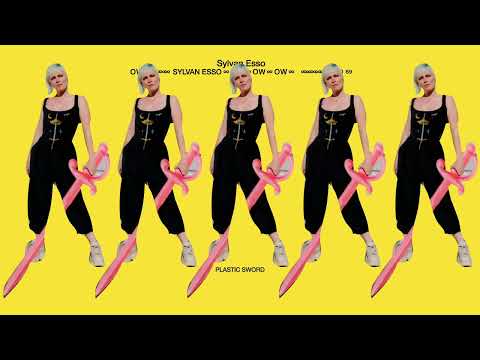
On the track “Plastic Sword,” it sounds like there's a gated vocoder. Is that gated after the vocoder?
NS: It's not gated. I think we did a light amount of dynamics on the thing leading into the vocoder, but then we used a Korg DVP-1 rackmount vocoder we got from our buddy, Philip Weinrobe [Tape Op #167]. We love vocoders. The stock Ableton vocoder is one of the greatest plug-ins ever. I fucking love that thing. It's so versatile. It's so flexible. But this had the inverse quality of the stock Ableton vocoder. It had this tactile, gatey sound. It heightened the dynamics of the source material. I fucking love that thing.

The new single, “Concrete Glen,” with the Sigur Rós [Tape Op #41] sample of "Svefn-g-englar" is super cool. How did you land there? Was it hard to get that cleared?
AM: It was relatively easy to get cleared...
NS: It just took a long time and was very expensive.
AM: I love those guys. Mountain Man, my first band, toured with Jónsi [Birgisson] in 2010. For the sample itself, Sandy just intuitively knew that it was going to fit.
NS: One of my dreams for this record was to have a distinct big sample drop moment. We've never sampled anything in that way. One of the reference points on the playlist that we kept coming back to was turn-of-the-millennium radio pop. Music that had that feeling of nostalgia. How can I reframe something? I knew I wanted to find some way to have a really meaningful sample drop. The earlier version of that track, there's no break there. There was a little instrumental moment, and then it would go into the thing. We had the song fully done. Then there was this moment where I was like, "Oh, this could be the song where we do this." I came up with three ideas of what maybe the sample could be. For some reason, I had listened to that record [Ágætis byrjun] that week, and I was like, "Maybe that moment."
AM: It was perfect. It was the first thing you played. You didn't play anything else in that spot.
NS: I tried a couple of things that got immediately jettisoned. But I found that time-stretched it just right, pitched it in the right key, and forced it to work.
AM: It was perfect.
NS: It also enhanced what the song was already saying. It felt like it brought it, for the two of us, into the moment that it needed to be. It had that college party era dissociative thing. One other cool thing about it was that when we first did it, it was like a lift up out of the chorus. It was a big drop moment, like it moved up into a breakbeat. It was like a shout chorus kind of thing, and it wasn't really working. We were listening to that same album; we put it on because we were thinking through things. The next track on that record, [“Starálfur”], the chorus gets really tiny. It's this really big track, and it goes down to this tiny little acoustic guitar. Jónsi sings so delicately, and then it gets big again. So, we thought, "Oh, wait. What if what we're thinking about this all wrong?" So, we sampled their arrangement from the same record in the idea of, "What if it gets small there instead of big?" And that unlocked the whole thing.


